In production
Episode 04 — Coming soon
The next episode is being researched and fact-verified before it is recorded. Subscribe on your platform of choice to hear it first.
Coming soon
Every episode of THE INSIGHT SOURCE starts before the recording happens. The research brief exists. The sources are verified. The search terms are already embedded. Then Amber and Brian talk about it.
The next episode is being researched and fact-verified before it is recorded. Subscribe on your platform of choice to hear it first.
Work is fine on paper, you slept, and you still wake up behind. The costs outside the job that keep draining you, why time off and recovery are two different things, and a plain test for whether your rest does anything.
Self-improvement promises a better life. This episode looks at what happens when the pursuit is organised around anxiety about not being enough, and why the nervous system reads the cost of a practice rather than its intent.
Most popular morning routines add stimulation at the exact moment your cortisol is peaking. Amber and Brian walk through the cortisol awakening response, sleep inertia, and the four habits that quietly push mornings into a reactive state.
THE INSIGHT SOURCE covers Mind & Body topics, and only Mind & Body topics. Nervous system regulation, sleep science, circadian health, gut health, stress recovery, movement, breath and more. The areas where the research is dense, the misinformation is rampant, and the stakes for listeners are real.
Every episode goes through the same production system I sell to clients: keyword research before the brief is written, fact verification before the recording starts, and SEO architecture built into the research conversation rather than bolted onto show notes afterward. Amber and Brian don't speak about any topic until the groundwork is done.
A lot of what the show covers sits right in my wife's field: the gut, the vagus nerve, how stress shows up in digestion. She's a holistic gut health practitioner at Anjas Weg (in German). When her work comes up in an episode, she's named and linked, and it goes through the same source check as everything else. The show doesn't borrow her authority.
The show is the proof-of-work. If you want to hear what research-first production sounds like in practice, this is where you find it.
A note on the hosts. Amber Reed and Brian Hirst are AI voices. I do the research, the fact-checking and the writing; the delivery is produced with AI voice technology. I would rather say that here than have you work it out later, because a company selling fact-verification should not be vague about how its own show gets made.
See how the methodology works →
Early forties, and constitutionally unable to say no to something that genuinely interests her, which is how her history ended up scattered across countries, disciplines, and one research team she talked her way onto. She thinks in mechanisms, and would rather sit inside an unresolved tension than tidy it away. She does not perform confidence she has not earned. When Amber says something is solid, the source is in the show notes.
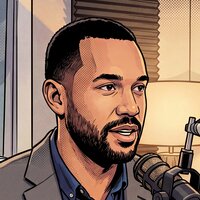
Late thirties, came up somewhere ideas only counted if they produced a result, and has spent recent years quietly revising things he was once certain about. A burnout that took the better part of a year left him permanently suspicious of pushing through. He asks what a finding means for an actual person on a regular day, and distrusts any explanation that needs complexity to sound credible.
Both are fictional. Their histories are written. What they argue comes from the research briefs built for each episode, with real sources verified before recording. Neither of them improvises a fact. Why the show is made this way →

Amber Reed and Brian Hirst are written characters, performed by AI voices. They are the only invented thing on this show, and I would rather tell you that here than let you wonder about it later.
The reason they exist is structural. An argument you only ever hear from one side is a position rather than an argument. I wanted the research contested out loud, pushed at and steelmanned, and left open in the places where the evidence is genuinely unresolved. One person alone at a microphone cannot do that honestly. They can only narrate a conclusion they already arrived at.
So I wrote two people who disagree in useful ways. Amber thinks in mechanisms and will not claim more certainty than a source supports. Brian wants the practical answer and pushes hard for it. When he pushes and she holds the line, you are hearing the fact-check happen in real time.
Everything they say traces back to something real. The research, the source verification and the writing are mine, and the verified source list exists before either of them speaks a line. Two voices and two histories are the fiction. The evidence underneath them is not.
Subscribe on your platform of choice. Every episode is fact-verified before it is recorded, so you're not listening to someone's best guess.
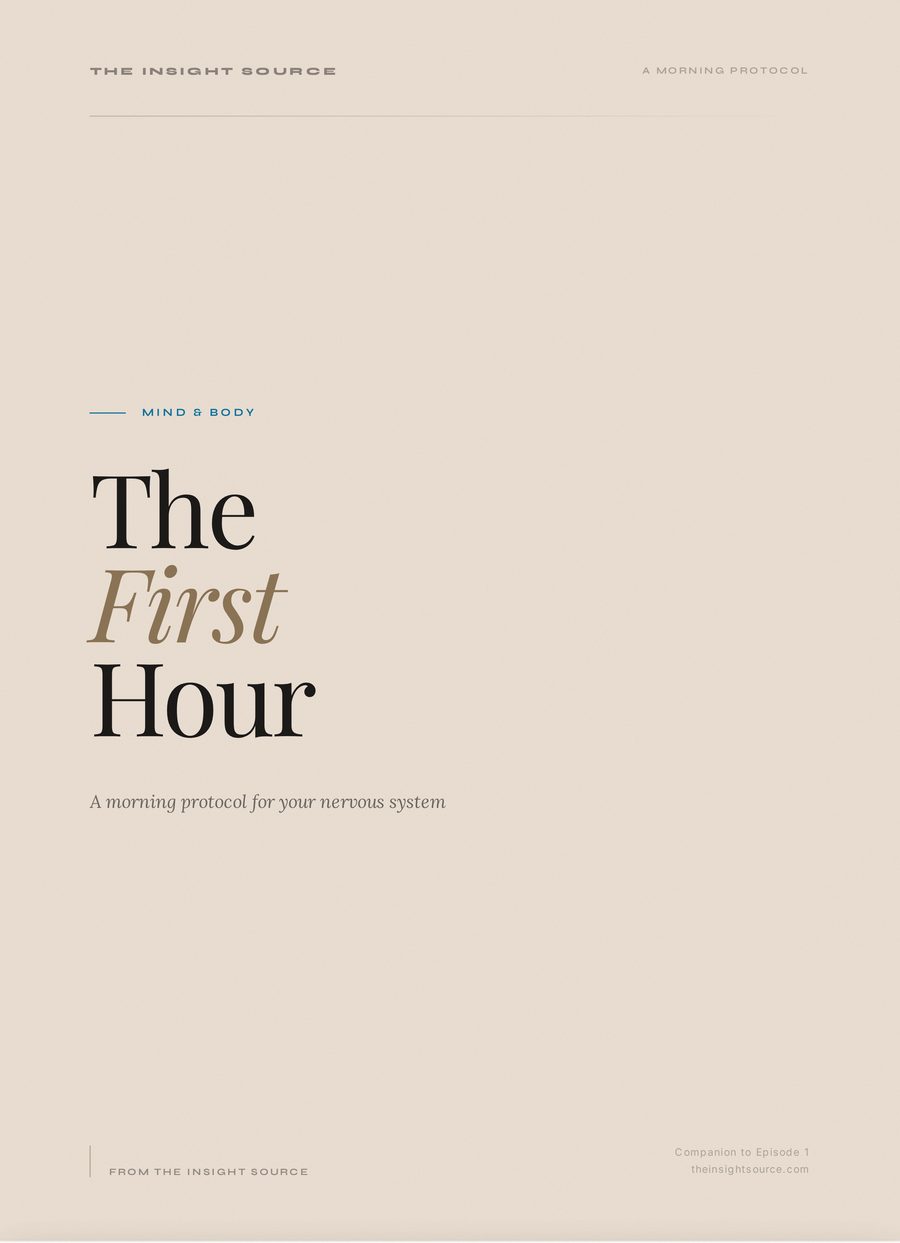
Your body produces a natural alertness spike in the first 30–45 minutes after waking, before caffeine, before any decisions. This free seven-step guide works with that window instead of against it. No 5am start, no rigid rules.
Free for subscribers. Enter your email and it’s yours.
Mind & Body topics only: nervous system regulation, sleep science, stress and recovery, morning habits, gut health and movement. Each episode is built from a research brief with sources verified before recording, using the same production system THE INSIGHT SOURCE sells to clients.
No. Amber Reed and Brian Hirst are written characters performed by AI voices. They are the only invented element of the show, and it is stated openly on the podcast page. The research, the source verification, the editorial angle and every line of script are written by Martin Schattenberg.
Health research is rarely tidy. Most findings arrive with a caveat, a sample size worth mentioning, or a gap between what a study showed and what it later gets used to sell. A single narrator has to flatten all of that into one confident line. Two people do not: one can hold the caveat while the other pushes for the takeaway, and the listener hears both. Writing the hosts rather than hiring them means that tension can be built to serve the evidence instead of the edit: Amber will not overstate what a source supports, and Brian keeps asking what it actually means for someone about to change something in their life.
Claim verification happens before recording, not after publication. Every factual statement planned for an episode is traced to a primary source during the research phase, and any claim that cannot be sourced is either cut or stated qualitatively rather than as a specific figure.
On Spotify, Apple Podcasts and YouTube. New episodes are published regularly.
No. Every episode is general education, not medical advice. Episodes covering clinically sensitive topics carry an explicit disclaimer and route listeners to qualified support.